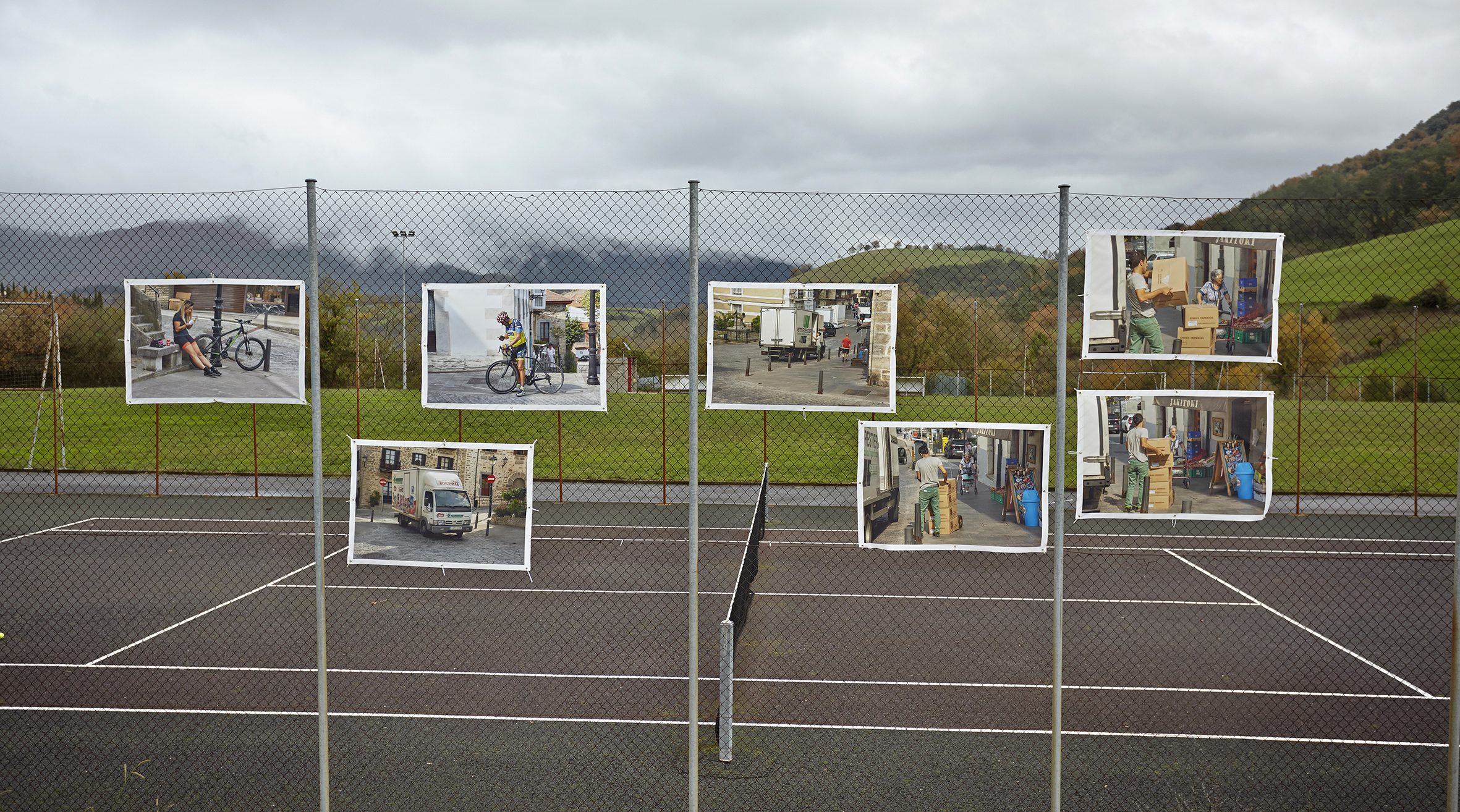
Somewhere Better, Nowhere Better (the book)
El libro está a la venta en la librería de La Fábrica, en la librería La Central del Museo Reina Sofía y en Panta Rhei en Madrid.
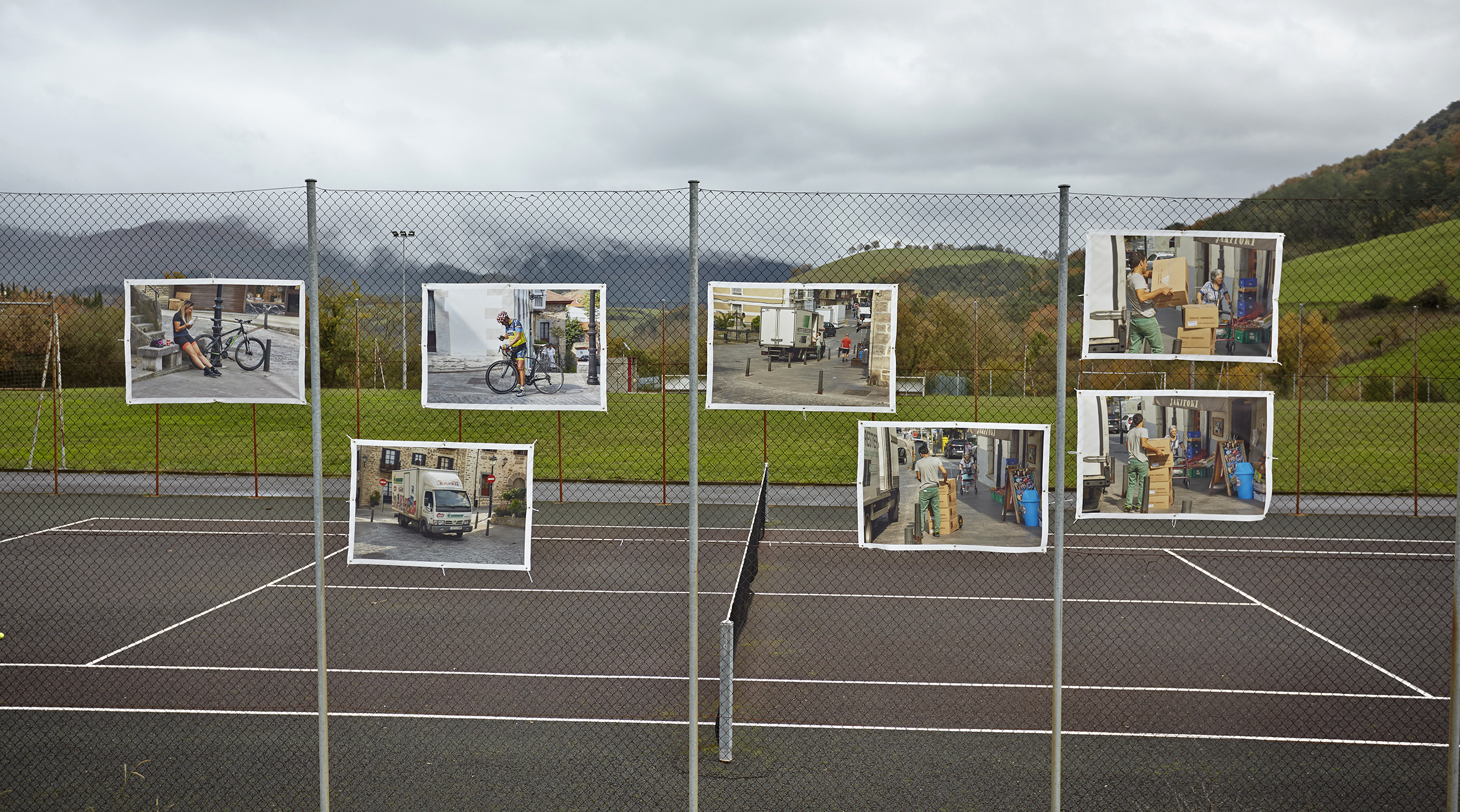
SOMEWHERE BETTER, NOWHERE BETTER recoge mis inquietudes por aspectos económicos y sociales que considero relevantes en mi entorno inmediato. Son aspectos universales que en su dimensión local toman cuerpo a través de la fotografía. Mi análisis a través de este medio hace que incluso la propia naturaleza del mismo así como sus usos se conviertan en objeto de estudio.
Por todo ello, se presentan varias series que tratan temas en apariencia inconexos que sin embargo intentan dar luz a una imagen del mundo desde la fotografía y con ella como excusa narrativa. SOMEWHERE BETTER, NOWHERE BETTER es una polifonía en la que aparecen distintos temas: la globalización versus las fronteras territoriales, el consumo y, en este nuevo contexto, de qué manera son, los usos sociales de la imagen fotográfica. Cada uno de estos temas se trata de manera independiente en una serie de fotografías con distintos elementos, espacios y lugares.
SOMEWHERE BETTER, NOWHERE BETTER collects my concerns about economic and social aspects that I consider to be relevant in my immediate environment. These are universal issues, however, when they are photographed in their local environment as an object of study, they take on a different meaning.
The different series that are presented in the book deal with topics that at first glance may seem unconnected, however, they try to illuminate an image of the world in a narrative sense through the medium of photography. SOMEWHERE BETTER, NOWHERE BETTER is a polyphony in which different topics appear; globalization verses territorial borders, consumerism as a meta-narrative verses individual personalized narratives and how social uses of photography can uncover these diametrically opposed stances. Each of these topics is explored using photography featuring different elements, spaces and places.
La cita de los miércoles en lunes/ Monday´s Wednesday Quotation
“Las fotografías también, pueden hacer extraños los signos y los objetos familiares de nuestro mundo, aunque esto no es lo que habitualmente pensamos sobre las mismas. En vez de esto, tendemos a pensar que las fotografías nos proporcionan documentos de la apariencia de las cosas, y ciertamente ésta es una de las fuentes de su fascinación y placer. Con las fotografías podemos preservar importantes momentos de nuestras vidas o tener en nuestras manos imágenes de acontecimientos lejanos en el tiempo y el espacio. Las fotografías nos ponen en contacto con cosas que de otra manera serían inaccesibles. Pero las fotografías no simplemente registran; su fascinación no es simplemente por conservar. Las fotografías transforman sus temas. Tienen el poder de que incluso los objetos más familiares parezcan extraños, los eventos más caóticos parecen estructurados, o los artículos más mundanos aparecen cargados de significado. Las fotografías parecen revelarnos cosas que no pueden ser vistas sólo con nuestros ojos”
“Photographs, too, can make strange the familiar sights and objects of our world, although this is not usually how we think of them. Instead, we tend to think of photographs as providing us with records of how things look, and certainly this is the source of much of their pleasure and fascination. With photographs we can preserve important moments in our lives or hold in our hands images of events distant in time and place. Photographs acquaint us with things that would otherwose be inaccessible. But photographs do not simple record; their fascination is not simply that of preservation. Photographs transform their subjects. They have the power to make even the most familiar objects apper strange, the most chaotic events appear structured, or the most mundane items appear burdened with meaning. Photographs seem to reveal to us things that connot be seen with our eyes alone.”
Barbara E. Savedoff, Transforming Images, How Photography Complicates the Picture, Cornell University Press, 2000. Page 2.
La cita de los miércoles / Wednesday´s quote (3)
“Es dudoso que la fotografía americana vaya a producir alguna vez fotografía social con una motivación ideológica, así como nunca ha producido fotografía conceptual pura. Las raíces del utilitarismo americano, el puritanismo y el pragmatismo son profundas. A pesar de su coqueteo con la descripción desapasionada, la imageniería conceptual, y la neutralidad, la fotografía americana contemporánea está aún más profundamente comprometida con el mundo material que con el mundo de las ideas.
La sensibilidad americana – quizá más que ninguna otra en el siglo XX- ha sido extraordinariamente receptiva a la empresa fotográfica, precisamente por el compromiso inherente de la fotografía a los hechos y a la democracia de la visión”
“It is doubtful that American photography will ever produce an ideologically motivated social photography, just as it has never produced a purely conceptual photography. The roots of American utilitarianism, Puritanism, and pragmatism run deep. Despite its flirtation with dispassionate description, conceptual imagery, and neutrality, contemporary American photography is still more deeply commited to the material world than to the world of ideas.
The American sensibility – perhaps more than any other in the twentieth century – has been extraordinarily receptive to the photographic enterprise, precisely because of photography’s inherent commitment to fact and to teh democracy of sight”
Jonathan Green, American Photography: A Critical history 1945 to teh Present, Harry N Abrams, new York, 1984, p. 22, cited in The Photobook: A History volume II, Martin Parr and Gerry Badger
New Link. The Sonic Blog
The Sonic Blog es un excelente blog sobre fotografía artística que escribe en alemán e inglés Peter Feldhaus. Se centra principalmente en fotografía europea y americana.
The Sonic Blog is an excellent blog on art photography written in German and in English by Peter Feldhaus. It focuses on European and American Photography.
New link. Matías Costa
Un blog muy interesante y muy fino para leer estos días.
http://matiascosta.blogspot.com/

Matías Costa
Lapsus magazine
Carlos Albalá y Ana Himes han creado al revista digital Lapsus llena de imágenes sugerentes.

Carlos Albalá and Ana Himes have created the digital magazine Lapsus which is full of sugestive images.
via Hippolyte Bayard
Mayra Martell + Roberto Bolaño
Estoy leyendo la novela 2666 del escritor chileno Roberto Bolaño. Un par de amigos me habían recomendado este libro y comencé a leerlo sin saber nada de su argumento. La sorpresa está siendo muy grande al encontrarme con una novela cruda y global. Ahora estoy leyendo el cuarto capítulo, La parte de los crímenes, en la que Bolaño describe y enumera los crímenes de Santa Teresa, una ciudad mexicana que coincide con Ciudad Juárez, por lo que sucede allí y por sus características. Simplemente es desgarrador y a veces dejo de leer este largo capítulo lleno de nombres de mujeres asesinadas.
Hoy me he reencontrado con el trabajo de Mayra Martell, una joven fotógrafa mexicana. Mayra es de Ciudad Juárez y documenta los espacios privados de esas mujeres desaparecidas cuyos cuerpos no han aparecido. En sus habitaciones encontramos detalles como esta nota en la que una de ellas anotó sus metas a corto y a largo plazo. Mayra comenta sobre su trabajo: “Es como hablar de su presencia a través de los recuerdos que tienen sus familias. Son chicas que salieron a la escuela o a la tienda; que tienen cinco, 10 años desaparecidas y su familia no sabe si regresarán… Como muchas no tienen fotos, la reconstrucción es mediante la memoria. Ahora que lo pienso, creo que no fotografío la ausencia, sino la presencia que continúa en esos espacios”.

mayra Martell

Mayra Martell

Mayra Martell
I am reading the novel 2666 , writen by the Chilean Roberto Bolaño. A couple of friends had recommended this book and I started to read it without knowing anyhting about its plot. It has been a big surprise finding this raw and global novel. Now I am reading the forth chapter, The Part About the Crimes, in which Bolaño describes and lists the crimes of Santa Teresa, a Mexican city with teh same characteristics and crimes as Ciudad Juárez. It is simply bloodcurdling, sometimes I stop reading this long chapter full of names of murdered women
Today I have found again the work of Mayra Martell, who is a young Mexican Photographer. Mayra comes from Ciudad Juárez and she documents the private spaces of the missing women whose bodies haven’t appeared. In her rooms we findwdetails as the note where one of these women wrote her aims in a short term and in a long term. Mayra says about her work: ” It is as speaking about her presence through the memories their families have. They are girls who went to school or to a shop; who are missing for 5, 10 years and their families don’t know if they will come back… As many families don’t have photos, the reconstruction is made through memory. Now I think about it, I think I don’t photograph the absence, but the presence that continues in those spaces”.
Margareta Kern
El trabajo de la fotógrafa croata Margareta Kern es muy interesante.
Destaco sus series Clothes for Death y Graduation Dresses. En estos trabajos aborda el tema del vestir y sus funciones sociales. El vestido de la fiesta y el vestido de la muerte.
Margareta tenía un blog mientras realizaba Clothes for Death

Margareta Kern. Tea (Cosmopolitan dress) 2005

Mara (Orubica, Croatia), Clothes for Death series, 2007
The work of the Croatian photographer Margareta Kern is very interesting.
It is worth noting her series Clothes for Death and Graduation Dresses. In these projects she deals with the issue of clothes and its social functions. En estos trabajos aborda el tema del vestir y sus funciones sociales. The dress fot the party and the dress for death.
Margareta kept a blog while she was doing Clothes for Death.